What can you actually do with it?
Colleges are failing, and their campuses are landing on the market. More than fifty have closed or merged since 2020, and some projections put the number of closures past four hundred before the decade is out. When a school goes under, the campus is usually the only asset left to repay the people who financed it, so it goes up for sale whether or not anyone has any idea what to do with it. The asking prices can look like a steal.
They are not steals. They are a lesson about how real estate actually works.
A campus is worth almost nothing as a campus. Nobody is opening a new college. The lecture halls, the dormitories, the dining commons, the chapel, all of it was built for one use that no longer has a buyer. What the property is worth is whatever the next owner can make of it, and that is usually a fraction of what the seller believes and a fraction of what it cost to build.
This fact runs through all of real estate. The more specific a building is, the harder it is to repurpose. And past a certain point, it’s not just hard to repurpose; it’s impossible. A property that can only ever do one thing is worth close to nothing to anyone who needs it to do something else.
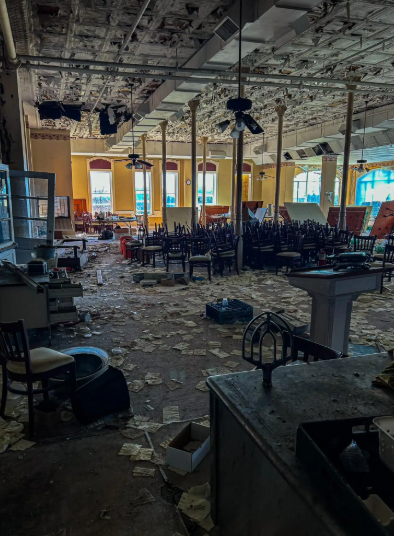
The graveyard is real
The reason this matters is that plenty of these properties never find a second life at all. They just sit.
Virginia Intermont College in Bristol closed in 2014. A buyer picked it up at auction in 2016 for a little over three million dollars and announced plans to reopen it as a business school. A decade later, none of that has happened, and the campus has spent those years decaying in place. Atlantic Union College in Massachusetts closed in 2018. The residential parcels sold, but the plan to turn the rest back into a school fell apart, and roughly fifteen buildings still stand boarded up with the books on the shelves inside. As of early this year, nothing had changed.
Malls tell the same story on a bigger footprint. Hawthorne Plaza outside Los Angeles closed in 1999 and sat empty for close to thirty years while owners and the city cycled through redevelopment plans that never produced anything. A 2017 proposal for housing, a grocery store, a food hall, and a theater came to nothing. This month a court order finally forced the owners to tear it down, and even now no replacement project has been announced. Carousel Mall in San Bernardino ran a shorter version of the same path. Vacant since 2017, overtaken by fires and crime, it was eventually handed to the city and slated for demolition.
Hospitals are the hardest of all. St. Joseph Riverside Hospital in Warren, Ohio closed in 1996 and sat vacant for more than twenty-five years. Nobody could make the numbers work, and by the end the building was not just empty, it was a liability. At 270,000 square feet and full of asbestos, tearing it down took a multimillion-dollar state grant. A property in that condition is not a cheap asset waiting for a buyer. It is a bill waiting for someone to pay it.
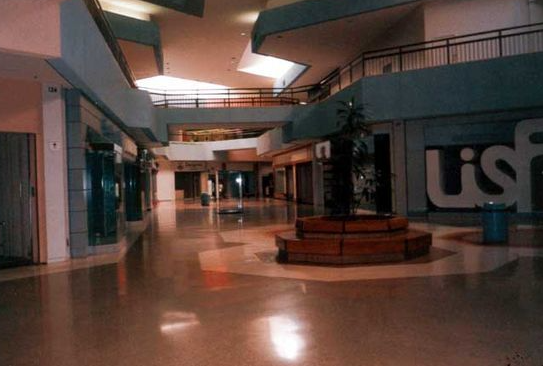
Why single-purpose buildings fight reuse
There is a physical reason these buildings are so hard to convert.
A building designed around one function is built to fit that function and nothing else, which is exactly what makes it so hard to reuse later. Hospitals are the clearest case. The older ones were laid out with deep floor plans, custom structural grids, and mechanical systems that thread through the entire building at once. It suited the hospital it was built for at the time. It is a nightmare for anyone who comes later, because you cannot open up a wing, change a layout, or convert a floor without running into systems that serve everything around it. And medicine itself has moved. Corridor widths, ceiling heights, door sizes, air handling, infection control, all of it is governed by codes that have tightened over the years, so even a buyer who wants to keep it a hospital often inherits a building that no longer meets the standard. Whoever buys it is not renovating a space, they are gutting it to the frame.
Offices are the version of this everyone is watching right now. A big office building is built around a solid interior core, with the elevators and plumbing stacked in the middle and open floors fanning out around them. That is efficient for a company. It is close to unusable for housing, because an apartment needs a window and its own kitchen and bath, and the middle of an office floor has neither and cannot easily get either. Convert one and the center of every floor becomes space nobody can live in, while you run new plumbing through a building designed to hold it all in one place. It is why so many office conversions that look effortless on a spreadsheet fall apart the moment someone measures how far the core sits from the glass.
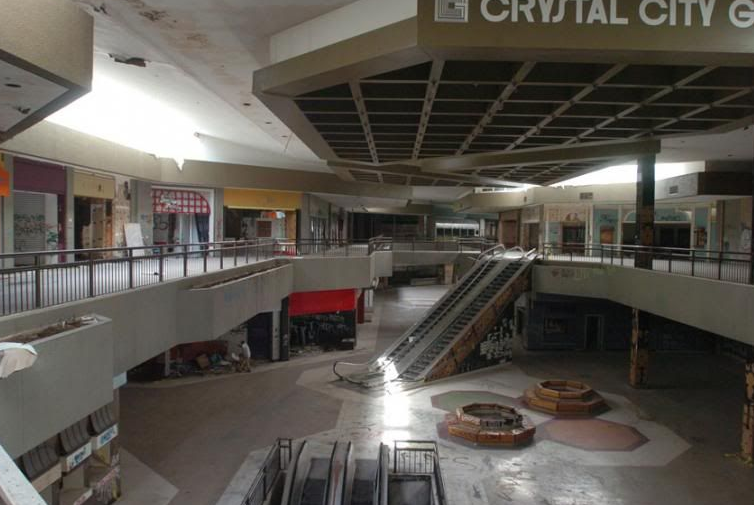
A campus carries the same trap in a different shape. Gyms, libraries, and dormitories are each built for one purpose, and there is not much of a resale market for a used dormitory.
The ones that worked, and why
Some of these properties do get a second life, and the ones that come back tend to have a similar theme.
Birmingham-Southern College in Alabama closed in 2024 on a 192-acre campus inside a major city. Two local universities looked at buying it and both walked away, and the site sat for two years before the federal government finally stepped in to take it. Southwest Detroit Hospital closed in 2006 and sat empty for nearly two decades before it found a second life, not as a hospital or anything close to one, but as the future home of a professional soccer stadium. It only worked once somebody stopped trying to make it a hospital again.
The difference between the properties that come back and the ones that rot is rarely luck. Location and politics do most of the work. It takes a buyer who arrives with a real use in mind that works for the town, and the town willing to permit it. When those things line up, the existing infrastructure can even give the next owner a head start. When they do not, the property waits. And in real estate, waiting = money lost.
The lesson for any deal
None of this is all is really about colleges, or malls, or hospitals. It is about really knowing what you’re buying - especially when you’re buying special use properties that are being unloaded off someone’s balance sheet because it went sideways on them.
A low price feels like room to make money. More often it is the market telling you about a problem nobody has solved yet. The property is cheap because turning it into something people will pay for is slow, uncertain work that may not pan out at all. What decides it are two things that never appear on the listing sheet. Whether the jurisdiction will allow the use you have in mind, and whether the building can physically become what you need. Get clear answers to both and the low price is a real opportunity. Without them, you have bought a large, expensive object that does exactly one thing nobody wants it to do anymore.
So before you take the bargain, answer the only question that counts. What can you actually do with it? If the answer is real and specific, you may have found something. If it is not, then it was never cheap land. It is a worthless patch of grass with a good story attached.
Why a small miss becomes a big one
The ten-year count is the foundation for every yearly estimate after it, and each year gets built off the year before. So an error in the foundation doesn't sit still. It rides forward through the whole decade, and then a forecast stretches it another fifteen years. Off by a few percent at the start and you're off by a lot more at the end.
Sources
- College closure numbers and the Virginia Intermont, Atlantic Union, and Birmingham-Southern cases: Inside Higher Ed, "Second Acts for Closed Campuses" (May 2026), https://www.insidehighered.com/news/business/physical-campuses/2026/05/14/second-acts-closed-campuses
- Hawthorne Plaza demolition: Patch (this month), https://patch.com/california/redondobeach/long-abandoned-south-bay-mall-finally-coming-down-reports
- Carousel Mall: CBS LA, https://www.cbsnews.com/losangeles/news/carousel-mall-in-san-bernardino-set-for-demolition-after-sitting-vacant-for-five-years
- Chambersburg Mall dry-township detail: Yahoo News, https://news.yahoo.com/chambersburg-mall-officially-dead-owner-193009489.html
- St. Joseph Riverside Hospital: Architectural Afterlife, https://architecturalafterlife.com/2022/06/st-joes-hospital/
- Why hospitals resist reuse, plus the 2024/2025 closure counts: ScienceInsights, https://scienceinsights.org/why-do-hospitals-get-abandoned-and-left-to-decay/
